Last engagement: engineering spend down 33% while the team grew, net revenue retention from 85% to a measured 102%, and a rebuild that had run nine months shipped in four. Steady state is not where I'm useful, and I'll tell you that before you hire me.
The long version of what a CV compresses into seven bullets, including the parts that went badly.
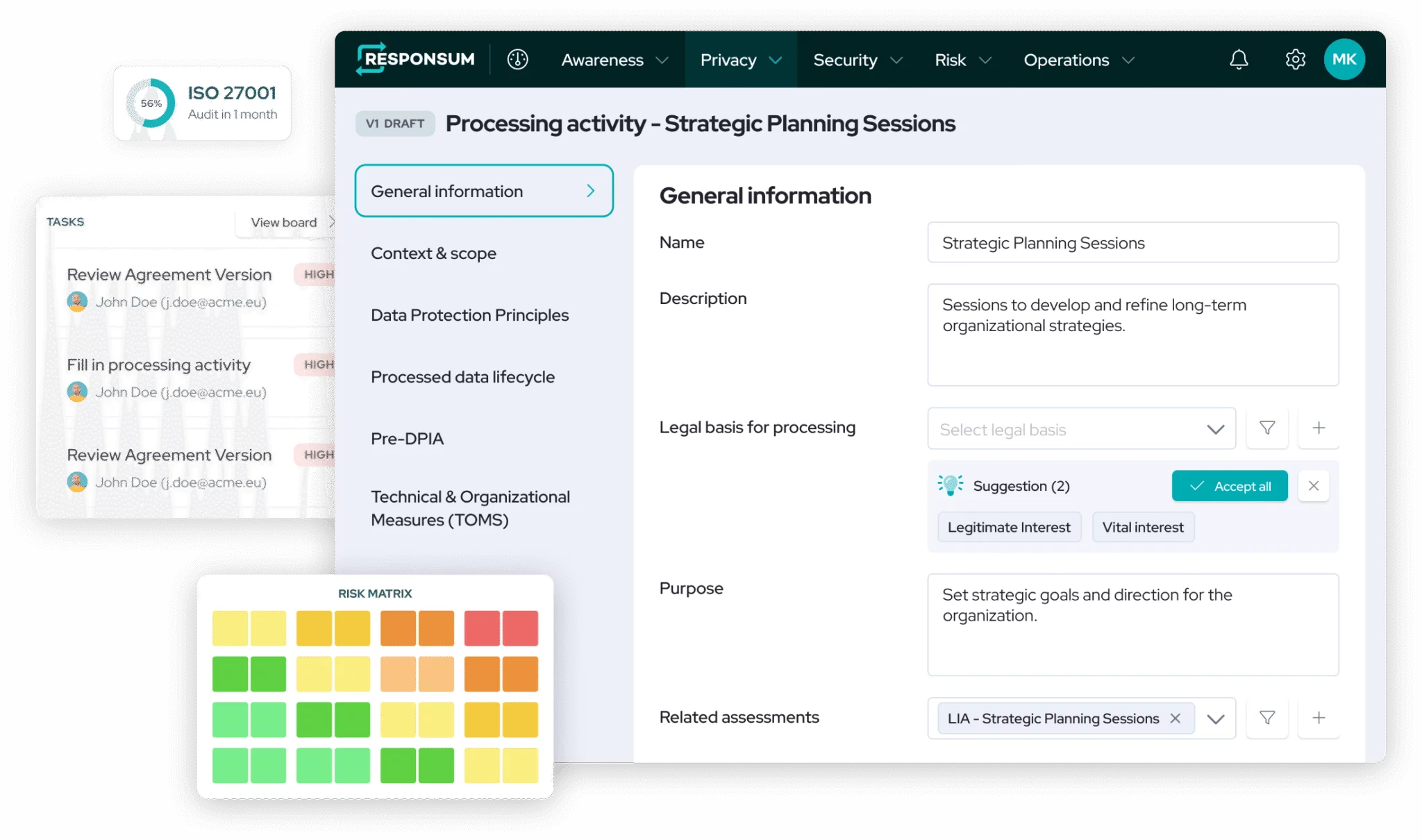
The all-in-one privacy and compliance platform. 120+ customers, 100k+ users, G2 High Performer in EMEA. I've owned engineering and product since 2023 and about half the company reports to me, including operations. GDPR, SOC 2 and ISO 27001 are deal-blockers I get past.
I joined full-time, then proposed cutting my own hours to 80%, and to fractional in 2026, because by then the transformation work was done.
responsum.eu →
−33%
Engineering spend, while the team grew
−58%
Cost per engineer
85%→102%
Net revenue retention
7→11
Team size, and more senior with it
2×
Average deal size
Most of the budget was going to consultancies. One of them had a developer straight out of school on the project, billing more per day than a senior costs.
We rebuilt around local senior engineers and a Ukrainian team. Spend dropped by a third, cost per engineer by 58%, and headcount went up. Cheaper and better turned out to be the same decision.
Customers were leaving, and they were not quiet about it. Nobody was tracking retention at all, so the first job was simply measuring it.
After that it was slow work. Stability and performance stayed at the top of the roadmap until the number moved, from roughly 85% to a measured 102%. No new feature carried that. The existing ones just started working.
10 hires in 18 months, most of them in the first 9. One person stayed from the team I inherited. Every offer I made was accepted.
Roughly one in three hires does not work out, and I find that out in weeks instead of months. Several of the people I brought in would come with me to the next thing. That is the only hiring metric I trust.
One rebuild had been running for nine months and was maybe half finished. We shipped it in four, and it was better in almost every way.
What came after mattered more than the four months. Until then the team argued about scope, about review, about what done meant. After that project nobody had to argue about what normal looked like.
The AI roadmap paid for itself through VLAIO R&D funding, which also made a large refactor affordable. We shipped an MCP server the team uses to build customer-matched demos, plus an AI companion in the product.
The part worth stealing: wire your observability and product data into the loop. A model reasoning about a real trace beats one reasoning about your description of a trace, every single time.
As product and tech became autonomous I moved from firefighting to groundwork. Founded the operations team, built the accountability framework the company still runs on, worked on fundraising strategy, secured R&D funding.
So I proposed 80%, and later fractional. I'm still there, at the size the company needs now. Transformation work ends, but the need for it comes back, and when it does I scale up again.
What I got wrong
Kosy ended in an acquisition rather than the outcome we were aiming at, partly because I picked a cofounder who wanted a unicorn while I wanted to make remote work better. We were both right about our own goal and wrong about each other. I test that alignment much harder now, usually in the first conversation, which is why the next section exists.
Happy to go deeper on any of this. The details that don't belong on a public page are the ones worth a conversation anyway.
The fastest way for us to waste each other's time is a mismatch neither of us named up front. So, plainly:
Something has to change, and the change is technical, organisational and commercial at the same time. That overlap is the whole job.
I do transformation. Zero to one, or fixing your mess. Once the machine runs itself, I stop being worth the money.
I'm not a data or ML engineer. I understand the concepts, but I've never shipped Python or trained a model, so I'd hire for it. Same answer on mobile: PhoneGap and React Native only.
I'm no sales specialist either, though I know where pipeline breaks and how SDR-to-AE hand-offs work. Good enough to be useful in the room, not good enough to run it.
Same person, different amounts of me. Most engagements start as the first one.
Available now. I take on a small number of companies at a time. Any more and I would be present without being much use. Day rates depend on the shape and the commitment. Ask in the first call and you'll get a number, not a range. First conversation is free and I'll tell you if I'm the wrong person for it.
I own the technical calls and the budget behind them. The first month is usually finding out where the money and the time go. It is rarely where people think.
What to build next, and what to stop building. Stopping is usually the valuable half. Fast, good or cheap: build only what matters and the trade-off mostly stops biting.
The part that isn't engineering: the board deck, the technical half of a raise, the funding nobody applied for, and the framework that keeps it all honest.
Two of these came out of free mentoring calls. Better you hear that from me. References from people who actually paid me, and from several of the people I hired, are available on request.
His depth of knowledge was immediately clear, and the advice he provided was both insightful and practical. What stood out most was how approachable Sam is - he listens intently, asks thoughtful questions, and explains his recommendations in a way that's easy to understand and apply. His combination of expertise, empathy, and clarity makes him someone I would wholeheartedly recommend to anyone seeking guidance.
Sam was able to give me very deep insights in a very short amount of time. He speaks clearly from a place of genuine experience, doesn't sugarcoat and tells it like it is - exactly what I was looking for.
He asked the right questions, gave actionable advice tailored to our venture stage, and helped clarify key next steps for growth. I left the session feeling more confident and focused. Highly recommend him to any founder looking for clear, expert guidance.
Want the cheapest possible version of me?
GrowthMentor
1:1 sessions for founders, free to book. A good way to find out whether we'd work well together.
Started writing code in 2007, ended up running engineering teams, co-founded a startup and sold it. The messy middle between an idea and a working product is where I've spent most of my time.
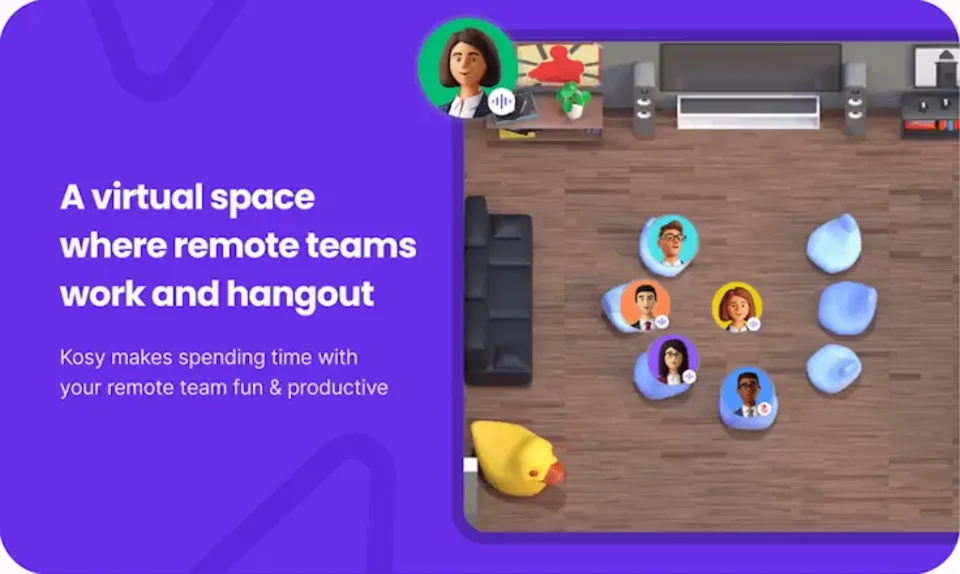
A seed-funded virtual office where remote teams could work side by side and enjoy it, peaking at 150 concurrent users. I built the MVP, found a cofounder, raised, hired and led a remote team, and architected the hard part: real-time spatial audio over WebRTC, in a browser.
Acquired by Kumospace in 2023, though not the outcome we were aiming at. The honest post-mortem is further up this page.
Workforce-planning SaaS for flexible workers. Led a mobile rework and a hosting migration that cut infrastructure costs by 40%, and kept a large pile of legacy tech debt from stalling delivery.
Real-time 3D product customisation on the web, front end through to the printer, for customers including BMW. Years ahead of its time. I joined as the third developer and ended up running three teams with two leads reporting to me.
The 3D team was struggling and I was asked to take it on. I found whoever understood the work best, handed him most of the leadership, and coached him. Fixed in two weeks. Most team problems are someone not having been given the job.
Full stack work on iChoosr's group-buying platform, running collective energy auctions for users across Europe. Where I learned what happens to software when a hundred thousand people arrive on the same afternoon.
Online retail with over 2 million active members across Benelux. Helped build and roll out a complete rewrite of the webshop, worked on the logistics system, and owned the roll-out of a new mass-mailing platform pushing around 2 million emails a day.
A self-led attempt at building a 2D game-creation platform from scratch. It never became a company, but it was my first go at running something myself, and a very clear lesson in the difference between building and shipping.
Agency work: analysing and building websites and web services for clients. Where I learned the craft, and how to ship on someone else's deadline.
Bachelor in IT, Application Development, passed with distinction
Karel de Grote-Hogeschool · 2007 – 2010
Core: TypeScript, React, Node.js, OpenAPI, microservices, CQRS, WebRTC.
Claude, MCP, agents, n8n.
Platform: AWS (Lambda, ECS, RDS, API Gateway, VPC, S3, CloudFront),
Postgres, MySQL, Mongo, Redis, queues, Docker, Terraform, CI/CD.
Observability & QA: Datadog, Grafana, Loki, Mixpanel, Playwright, HubSpot.
Security & compliance: GDPR, SOC 2, ISO 27001, SSO (SAML, OIDC, SCIM).
I still write code. Not on your critical path, but enough that nobody can tell me something is hard when it isn't.
I learn by building the thing. Most of what I bring to client work got tested here first, and some of it exists purely because it was fun.
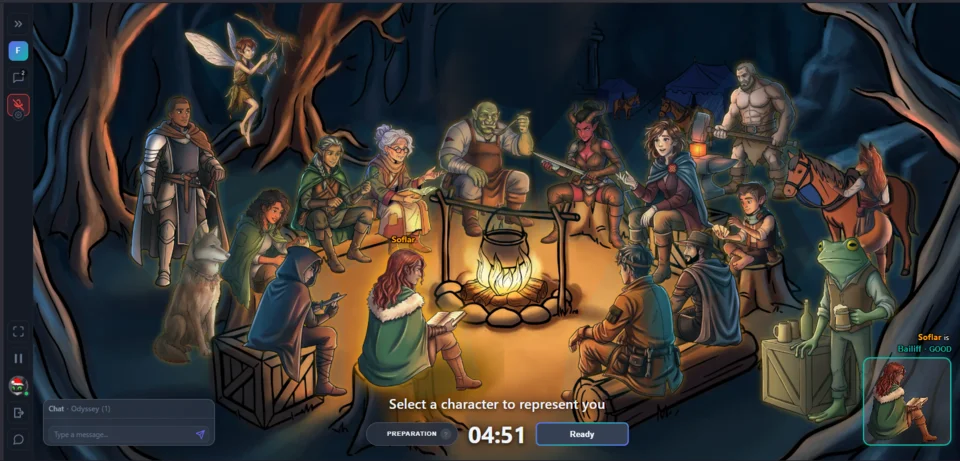
An online space where friends and remote teams hang out and play games together, built with Pieter Leon at Idea Imp. A playground for trying new AI techniques and whatever technology looks interesting that month. No roadmap, no investors, no KPIs. Just curiosity and good company.
It's also the successor to a problem I spent three years on at Kosy, which I'm apparently not done with.
Visit Cotime →
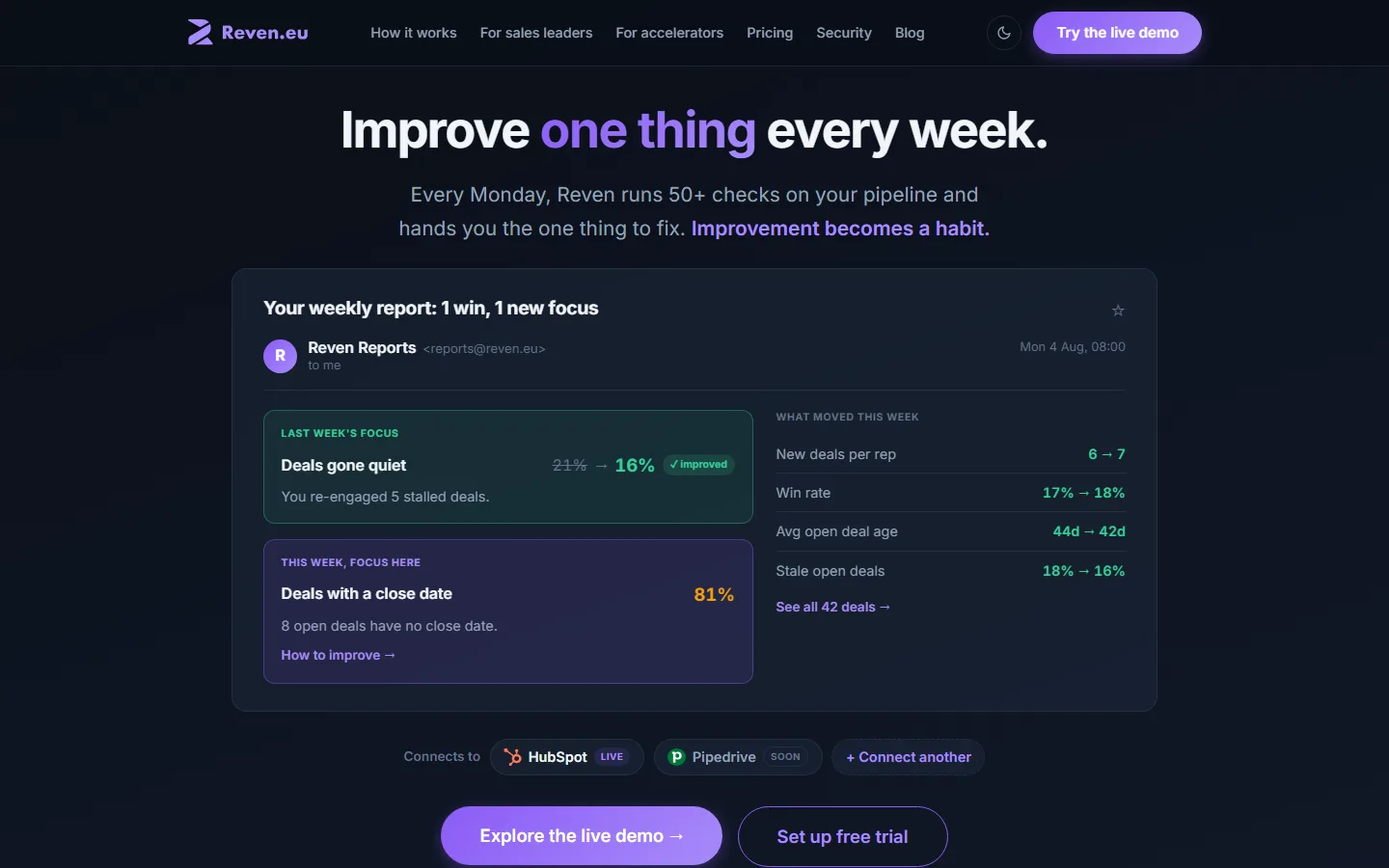
Weekly pipeline analysis for sales teams. Every Monday it runs its checks against the CRM (read-only, it never writes back) and returns the single thing most worth fixing that week, plus the monthly report a board actually asks for.
I built it to learn. I wanted to understand sales from the inside: CRM, RevOps, how a pipeline is run. Building the tool for a process is the fastest way I know to understand it. And an engineer looks at a pipeline differently, at the process more than the individual deals. That turned out to be the useful part.
Whether it becomes a product is still open. I'm validating that now, against real pipelines. If the answer is no, it was still the best sales education I could have given myself. So if you run a pipeline and this sounds useful, or obviously useless, I'd like to hear it.
Visit Reven →
Fractional & interim CTO · Product · Startup advisory
I've been writing code since 2007, worked my way up through engineering leadership, co-founded a funded startup and sold it, and spent the last few years helping founders across Europe build products people keep using.
What I'm good at is transformation. I need something to work towards and I'm always chasing the next 1%. Steady state bores me. Saying so out loud costs me work, and I say it anyway.
Pucco is how I stay selective: a small number of companies at a time, so I can be genuinely useful rather than merely present. Based in Lommel, Belgium, working across Europe. Dutch, English, and conversational French. When I'm not doing any of that, I'm usually building something with no business case whatsoever. See above.

No forms and no qualification funnel. Pick a channel and say hi. I answer everything myself, usually the same day, and I'll tell you straight if I'm the wrong person for it.
sam@pucco.be
linkedin.com/in/sam-meurs
Book 30 minutes
Free, via GrowthMentor
References available on request, including several of the people I hired.